

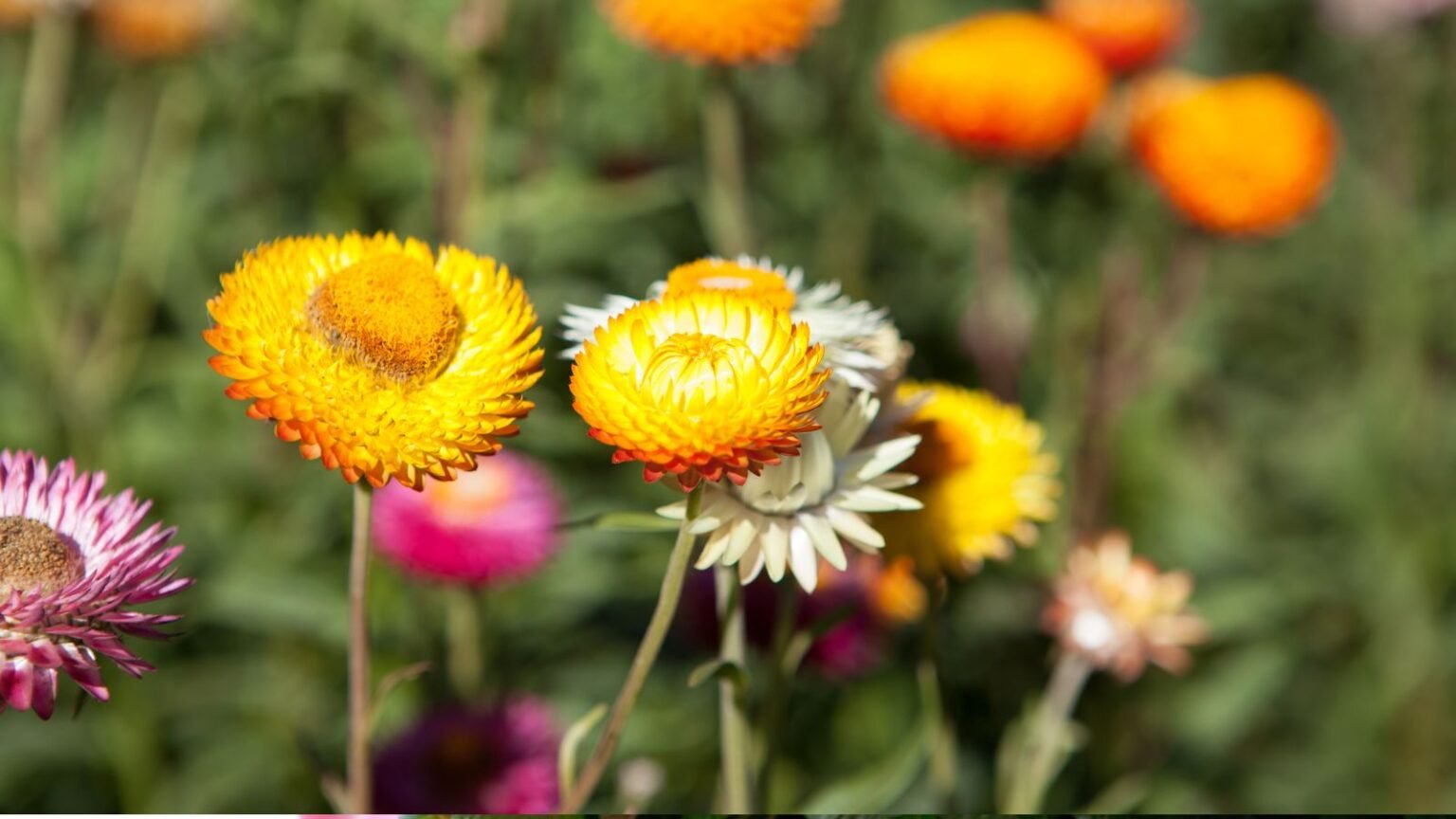
The strawflower plant (Xerochrysum bracteatum, formerly Helichrysum bracteatum) is a drought-tolerant annual or short-lived perennial native to Australia. It thrives in full sun, well-drained soil, and low-humidity conditions. Known for its papery, jewel-toned blooms that hold their color when dried, strawflowers are ideal for garden beds, containers, and dried flower arrangements.
Few flowers manage to be both a garden showstopper and a year-round decoration staple. The strawflower plant does exactly that. Its stiff, tissue-paper petals—which botanists call bracts—come in shades of gold, crimson, orange, pink, white, and deep burgundy. They look vivid in the garden through summer and autumn, and once cut and dried, they keep that same saturated color for months, sometimes years, without fading.
Strawflowers have been cultivated in gardens since the 1800s, when they were imported from Australia to Europe as ornamental novelties. Today, they’re a fixture in cottage gardens, pollinator plots, and low-water landscapes across North America. If you’re drawn to plants that earn their keep across multiple seasons and require surprisingly little fuss, strawflowers deserve a permanent spot in your growing plans.
This guide covers everything—from species selection and planting to seasonal care, common problems, container growing, and creative garden design applications. Whether you’re establishing a new garden bed or looking to add more texture to an existing planting scheme, the strawflower plant is one of the most rewarding choices you can make.
For more ideas on building a beautiful and functional outdoor space, explore the gardening section at Flight Homes, where you’ll find beginner-friendly guides and expert inspiration.
What Is a Strawflower Plant?
The strawflower plant (Xerochrysum bracteatum) belongs to the Asteraceae family—the same botanical family as sunflowers, daisies, and zinnias. Native to Australia, where it grows across open grasslands and dry coastal scrub, the plant has adapted to thrive in conditions that would stress most ornamental flowers: blazing sun, rocky or sandy soil, and extended dry spells.
What makes strawflowers visually distinctive is the absence of true petals. What appears to be a petal is actually a modified leaf called a bract. These bracts contain very little moisture, which is why they hold their shape and color long after the flower has been cut—a trait that makes strawflowers one of the most popular everlasting flowers for dried floral arrangements.
Strawflower plants typically grow between 12 and 36 inches tall depending on the cultivar, producing daisy-like blooms from late spring through the first frost. The central disk florets—the true flowers—open progressively as the plant matures, attracting bees, butterflies, and hoverflies throughout the growing season.
[Image placement: Close-up of multiple strawflower blooms in mixed colors against green foliage]
Alt text: Strawflower plant blooms in red, orange, and yellow showing characteristic papery bracts
Caption: The papery bracts of the strawflower plant retain their color even after drying, making them a favorite for everlasting arrangements.
Strawflower Plant Varieties Worth Growing
The strawflower species has been extensively hybridized over the past century. Today’s gardeners can choose from compact dwarf varieties perfect for container growing to tall cutting types bred specifically for dried flower production. Here are the most popular strawflower varieties available:
Dwarf and Compact Varieties
Mohave Series – One of the most widely grown dwarf strawflower varieties, the Mohave series reaches 10–14 inches tall and produces an unusually dense flush of blooms in a wide color mix. It’s an excellent choice for front-of-border planting and small containers.
Sundaze Series – A modern hybrid bred for extended bloom time and uniform habit. Sundaze strawflowers are particularly heat-tolerant and perform well in humid climates that typically stress standard strawflower varieties.
Bright Bikini Mix – A classic compact variety that grows to around 12 inches. The Bright Bikini mix produces fully double blooms in a vivid range of colors, making it popular for mass planting in garden beds.
Tall Cutting Varieties
King Size Series – Growing to 30–36 inches, the King Size strawflower is the standard choice for cut flower growers and dried flower producers. It produces large, 2–3 inch blooms on long, sturdy stems.
Flamingo Feather – A taller variety known for its soft, peachy-pink tones. Flamingo Feather is frequently grown in cottage garden designs alongside grasses and other everlasting flowers.
Specialty and Unusual Cultivars
Cockatoo – Features cream-white petals with a contrasting yellow center. The clean, neutral tones make it ideal for mixed bouquets where bolder colors might overpower other flowers.
Cherry Red – A uniform deep red variety grown specifically for its intense, saturated color. It dries exceptionally well and holds color for over 12 months when stored properly.
For more ideas on selecting plants that complement your home’s outdoor aesthetic, visit the home improvement section at Flight Homes.
How to Plant Strawflowers: A Step-by-Step Guide
When to Plant Strawflower Seeds or Transplants
Timing is critical for strawflower success. Because strawflowers are frost-sensitive, transplants should not go into the ground until all danger of frost has passed. In most USDA hardiness zones (zones 3–10), this means planting outdoors from mid-spring through early summer.
For indoor seed starting, sow strawflower seeds 6–8 weeks before your last expected frost date. Seeds germinate quickly—typically within 7–10 days at soil temperatures of 70–75°F (21–24°C).
In zones 9–11, strawflowers can be grown as short-lived perennials or planted in autumn for winter and spring bloom.
Choosing the Right Location
Strawflowers demand full sun. A minimum of 6–8 hours of direct sunlight per day is non-negotiable for healthy flowering. In sites with afternoon shade, plants tend to stretch and produce fewer blooms.
Soil drainage is equally important. Strawflowers grown in waterlogged or compacted soil are prone to root rot and fungal disease. Choose a raised bed, a sloped garden area, or a spot where water visibly drains after rainfall.
Soil Preparation for Strawflower Plants
Amend heavy clay soils with coarse sand and compost before planting. The ideal soil pH for strawflowers falls between 6.0 and 7.0. If your soil pH is outside this range, adjust with garden lime (to raise pH) or elemental sulfur (to lower pH).
A soil test from your local cooperative extension office is the most accurate way to confirm pH and nutrient levels before planting. According to the University of Minnesota Extension, even minor pH corrections can significantly improve nutrient availability for flowering annuals.
Planting Depth and Spacing
- Seeds: Scatter seeds on the soil surface and press gently. Strawflower seeds need light to germinate, so do not cover them with soil. Keep the surface moist until germination occurs.
- Transplants: Plant at the same depth as the nursery pot, spacing plants 9–12 inches apart for compact varieties and 12–18 inches apart for taller cultivars.
- Containers: One to three plants per 12-inch container, depending on the variety’s mature size.
[Image placement: Person transplanting strawflower seedlings into a sunny garden bed]
Alt text: Planting strawflower seedlings into well-drained garden soil in a sunny location
Caption: Strawflowers require full sun and excellent drainage from day one—choose your planting site carefully.
Strawflower Plant Care Guide
Watering Needs: How Much Water Does a Strawflower Need?
Strawflowers are drought-tolerant once established, but consistent moisture during the first few weeks after planting helps young plants develop a strong root system. After establishment, water deeply once or twice per week during dry spells, allowing the soil to dry out between waterings.
Overwatering is the single most common mistake with strawflowers. If the soil feels moist an inch below the surface, hold off on watering. Mulching with a 2-inch layer of organic material around the base of plants helps regulate soil moisture and suppress weeds without retaining excess water near the crown.
Fertilizing Strawflower Plants
Strawflowers don’t require heavy feeding. Excessive nitrogen encourages lush leaf growth at the expense of flower production. Instead, use a balanced, slow-release granular fertilizer (10-10-10 or similar) worked into the soil at planting time.
If plants show signs of slow growth or pale foliage mid-season, a single application of diluted liquid fertilizer—such as a fish emulsion or balanced liquid feed—can provide a gentle boost without pushing excessive vegetative growth.
Deadheading and Pruning
Regular deadheading—removing spent blooms—encourages continuous flower production throughout the season. For most strawflower varieties, this involves pinching or cutting stems just above a lateral bud.
If plants become leggy in midsummer, a moderate cutback of one-third of the stem height often stimulates a fresh flush of growth and blooms. This technique is particularly effective in warm climates where summer heat temporarily slows flowering.
Staking Tall Strawflower Varieties
Tall cutting varieties (over 24 inches) benefit from light staking to prevent stem breakage in wind or heavy rain. Bamboo stakes or wire plant cages inserted early in the season work well without damaging roots.
Seasonal Maintenance: Strawflowers Through the Year
Spring: Start seeds indoors 6–8 weeks before the last frost. Prepare garden beds by incorporating compost and checking soil drainage. Harden off indoor seedlings for 7–10 days before transplanting.
Summer: Water regularly during establishment. Begin deadheading as soon as the first blooms fade. Harvest stems for drying before flowers fully open for the best dried results.
Autumn: In zones 3–8, strawflowers will continue blooming until the first hard frost. Collect and dry any remaining blooms before frost arrives. Allow a few seed heads to mature if you want to save seeds for the following season.
Winter: In frost-prone climates, treat strawflowers as annuals and clear spent plants from beds after frost kills them. In zones 9–11, provide minimal protection during cold snaps and cut plants back by one-third to encourage new growth in spring.
For ideas on how to prepare your outdoor spaces for seasonal transitions, browse our gardening tips and home improvement guides at Flight Homes.
Common Strawflower Problems and How to Fix Them
Why Are My Strawflower Leaves Turning Yellow?
Yellowing leaves most often indicate overwatering or poor drainage. Check soil moisture before watering and ensure the planting site drains freely. If yellowing is accompanied by stunted growth, a soil pH imbalance or nutrient deficiency may be the cause—test your soil and amend accordingly.
Why Aren’t My Strawflowers Blooming?
Insufficient sunlight is the most frequent cause of poor flowering in strawflower plants. If plants are growing in partial shade, they may produce healthy foliage but few or no blooms. Other contributing factors include excessive nitrogen fertilization, which pushes vegetative growth, and planting too late in the season, which limits bloom time.
Aphid and Pest Management
Strawflowers are relatively pest-resistant, but aphids occasionally colonize young shoots, particularly in spring. A strong jet of water from a garden hose is often sufficient to dislodge small infestations. For persistent problems, insecticidal soap spray applied directly to affected areas is effective and safe for pollinators when used as directed.
Fungal Diseases
Botrytis blight (gray mold) and powdery mildew can affect strawflowers grown in humid conditions with poor air circulation. Prevention is far easier than treatment: space plants adequately, avoid overhead watering, and remove any diseased foliage promptly. Fungicidal sprays containing copper or sulfur can help manage established infections.
Stem and Crown Rot
Crown rot caused by Phytophthora or Pythium species is a serious problem in heavy, wet soils. Affected plants collapse suddenly at the base. There is no effective treatment once symptoms appear—remove and dispose of affected plants, and improve drainage before replanting in the same area.
[Image placement: Healthy strawflower plants with bright orange blooms in a sunny border]
Alt text: Healthy strawflower plants with no signs of disease, growing in full sun with good air circulation
Caption: Proper spacing and full sun are the simplest ways to prevent the fungal issues that affect strawflower plants in humid conditions.
Growing Strawflowers in Containers and Indoors
The Best Containers for Strawflower Plants
Strawflowers thrive in containers provided the pot offers adequate drainage. Choose a container with multiple drainage holes and fill it with a well-draining potting mix, ideally blended with perlite at a ratio of 3:1. Terracotta pots are excellent for strawflowers because they allow excess moisture to evaporate through the walls, reducing the risk of root rot.
Compact varieties such as Mohave or Sundaze are the most suitable for container growing, as they maintain a tidy habit without requiring staking.
Can Strawflowers Be Grown Indoors?
Strawflowers can be grown indoors only with access to extremely bright light—a minimum of 6 hours of direct sun through a south-facing window or supplemental grow lighting. Most indoor environments don’t provide adequate light for healthy flowering, making strawflowers a better choice for outdoor patios, balconies, and decks than for interior rooms.
If container-grown plants on a balcony or patio begin to stretch or lean, they are almost certainly not receiving sufficient light and should be repositioned.
For more guidance on designing beautiful outdoor container arrangements, explore the DIY and gardening ideas at Flight Homes.
How to Use Strawflowers in Garden Design
Cottage Garden and Meadow Planting
Strawflowers blend naturally into cottage garden designs alongside lavender, echinacea, yarrow, and ornamental grasses. Their upright habit and bold colors add vertical structure, while their extended bloom period ensures the planting remains visually interesting from early summer through autumn.
In meadow-style plantings, tall strawflower varieties grown alongside cosmos, bachelor’s buttons, and phacelia create a naturalistic, low-maintenance display that doubles as prime pollinator habitat.
Cutting Gardens and Dried Flower Production
For gardeners who want a steady supply of cut flowers, strawflowers are among the most productive and reliable species to grow. A single plant can yield 20–40 stems per season with regular harvesting.
To dry strawflower stems for arrangements, harvest when the central disk is still partially closed (before the flower fully opens). Strip the lower leaves, bundle 10–15 stems together with a rubber band, and hang upside down in a warm, dark, well-ventilated space for 2–3 weeks. Properly dried strawflower blooms can last 12–18 months without significant color loss.
Pollinator Gardens
Strawflowers are highly attractive to bees and butterflies, making them a valuable addition to any pollinator-friendly planting scheme. Their long blooming season provides a consistent nectar source during the summer gap when many spring-flowering plants have finished and autumn bloomers haven’t yet begun.
Pairing strawflowers with other pollinator-friendly plants—such as easy-to-grow backyard garden varieties like zinnias, salvia, and black-eyed Susans—creates a layered, high-impact border that supports local bee populations.
Low-Water and Xeriscape Landscapes
Because strawflowers are native to dry Australian grasslands, they’re a natural fit for xeriscape designs and water-wise gardens. Combined with sedums, ornamental alliums, Russian sage, and creeping thyme, strawflowers deliver bold color in landscapes designed to thrive with minimal irrigation.
How to Harvest and Dry Strawflowers for Arrangements
Timing the harvest correctly is the most important step in producing high-quality dried strawflowers. Flowers harvested too late—when the central disk is fully open—continue to open after cutting and may look overly open or disheveled once dried.
Step-by-step drying guide:
- Cut stems in the morning after dew has dried, choosing flowers where the outer bracts are open but the central disk is still partially closed.
- Remove all lower foliage to prevent mold during the drying process.
- Bundle 10–15 stems loosely with a rubber band or twine.
- Hang the bundle upside down in a warm, dark, low-humidity location with good air circulation.
- Allow 2–3 weeks for complete drying. The stems should feel brittle and the bracts should be fully stiff before use.
If you’d like to create home decorations using dried strawflowers, visit our home decor inspiration pages at Flight Homes for project ideas and styling tips.
Frequently Asked Questions About Strawflower Plants
Are strawflower plants annual or perennial?
In most climates, strawflower plants are grown as annuals because they are frost-sensitive. However, in USDA hardiness zones 9–11, strawflowers can survive mild winters and behave as short-lived perennials, often reblooming in their second year before declining.
How long does it take for a strawflower plant to bloom?
From seed, strawflowers typically begin blooming 10–14 weeks after germination, depending on the variety and growing conditions. Starting seeds indoors 6–8 weeks before the last frost ensures plants reach blooming size shortly after transplanting outdoors.
Do strawflower plants spread or self-seed?
Strawflowers can self-seed in favorable conditions, particularly in loose, well-drained garden beds. However, self-seeded plants often produce flowers that revert to a simpler form than the parent hybrid. Deadheading regularly will prevent unwanted self-seeding if that’s a concern in your garden.
What is the best way to encourage more blooms on a strawflower plant?
Consistent deadheading is the most effective way to extend and maximize bloom production. Removing spent flowers prevents the plant from diverting energy into seed production, redirecting it toward new flower development. Ensuring adequate sunlight (6–8 hours minimum) and avoiding excessive nitrogen fertilization will also support heavy flowering.
Can you eat strawflower petals?
Strawflower bracts are non-toxic but are not typically consumed as a culinary ingredient. Some sources note they can be used as a garnish, but they offer no notable flavor and are primarily grown for ornamental purposes.
What plants grow well alongside strawflowers?
Strawflowers pair well with zinnias, cosmos, bachelor’s buttons, lavender, rudbeckia, celosia, and ornamental grasses. These companions share similar sunlight and drainage requirements, making maintenance straightforward.
Are strawflowers good for pollinators?
Yes. Strawflowers are an excellent nectar and pollen source for bees, particularly native bees and honeybees. According to the Xerces Society, composite flowers like strawflowers are among the most accessible blooms for a wide range of pollinating insects due to their open, flat disk structure.
Make the Most of Every Growing Season
The strawflower plant rewards gardeners who give it what it needs—full sun, lean soil, and good drainage—with months of vivid color and an almost limitless supply of harvest-ready blooms. Few plants deliver this combination of garden performance and post-season utility.
Whether you’re planting a pollinator meadow, designing a cottage border, growing a dedicated cutting garden, or simply looking for a reliable, low-maintenance annual that genuinely earns its place, strawflowers belong on your shortlist.
For more practical, expert-backed gardening guidance and home design inspiration, explore the resources available across Flight Homes: