

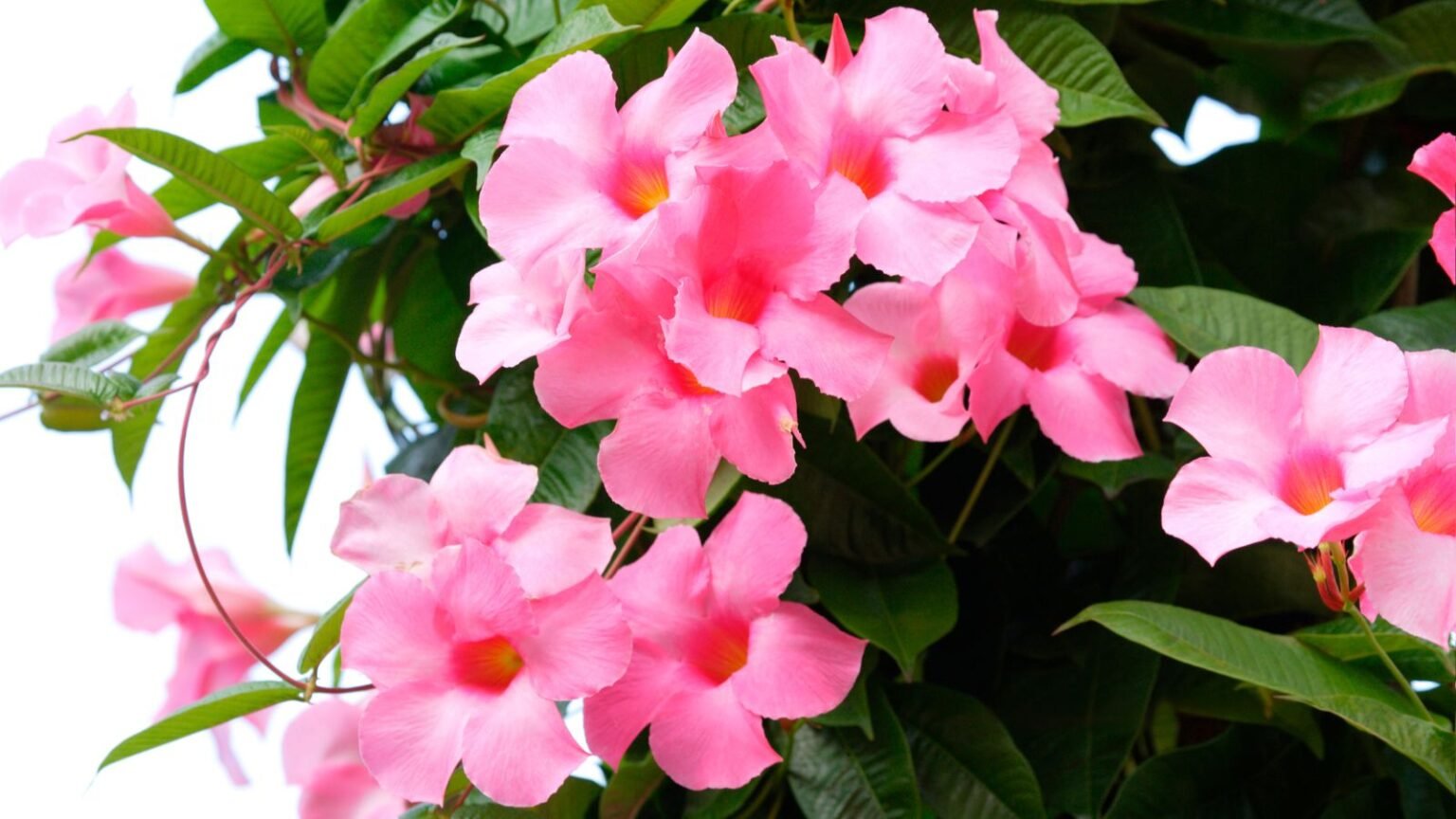
The dipladenia plant is a tropical flowering vine or shrub prized for its trumpet-shaped blooms in pink, red, and white. It thrives in full sun, well-draining soil, and warm temperatures above 50°F. With the right care—consistent watering, occasional fertilizing, and frost protection—dipladenia (also sold as mandevilla) rewards gardeners with season-long color.
Few flowering plants pack the visual punch of a dipladenia in full bloom. Those bold, trumpet-shaped flowers—blazing in shades of crimson, coral, hot pink, and creamy white—make it one of the most eye-catching plants you can add to a patio, trellis, or hanging basket. Yet despite its dramatic appearance, dipladenia is surprisingly manageable once you understand its preferences.
This guide covers everything: what dipladenia actually is, how it differs from mandevilla, the best dipladenia care practices for pots and garden beds, popular varieties like Rio dipladenia, step-by-step dipladenia planting instructions, and how to keep it thriving through the seasons. Whether you’re a first-time grower or an experienced gardener looking to expand your flowering plant collection, you’ll find practical, expert-level advice throughout.
Dipladenia fits beautifully into outdoor living spaces, and at Flight Homes, we’re passionate about helping you transform every corner of your home—including the garden—into something extraordinary. For broader gardening inspiration, explore our gardening tips and guides to discover what else could elevate your outdoor space.
[Image suggestion: A close-up of a dipladenia plant in full bloom showing multiple pink trumpet flowers against glossy green foliage. Alt text: “Dipladenia plant with pink trumpet-shaped flowers in a terracotta pot.” Caption: “Dipladenia produces vibrant trumpet-shaped blooms throughout the warmer months.”]
What Is a Dipladenia Plant?
The dipladenia plant belongs to the Mandevilla genus within the Apocynaceae (dogbane) family. Native to the tropical and subtropical regions of Central and South America—particularly Brazil and Argentina—dipladenia has been cultivated as an ornamental flowering plant for decades.
Botanically, what most gardeners call “dipladenia” is actually a group of compact, shrubby varieties within the Mandevilla genus. The name “Dipladenia” was an older genus classification that has since been merged into Mandevilla by plant taxonomists. However, the trade name has stuck, and you’ll still find dipladenia sold separately from mandevilla at most garden centers.
The flowers are the main attraction: large, five-petaled, funnel-shaped blooms that closely resemble those of hibiscus or petunia. They appear reliably from late spring through fall, with minimal deadheading required.
Dipladenia vs. Mandevilla: What’s the Real Difference?
This is the question most gardeners ask first—and the answer matters when you’re choosing between the two at a nursery.
Are dipladenia and mandevilla the same plant?
Technically, yes. Both dipladenia and the mandevilla plant belong to the same genus (Mandevilla). The distinction is largely horticultural rather than botanical, but it’s a useful one.
Here’s how they typically differ in practice:
- Growth habit: Dipladenia tends to grow in a compact, mounding, bushy form. Mandevilla, particularly the mandevilla vine types, are aggressive climbers that can reach 10–20 feet when given support.
- Leaf texture: Dipladenia leaves are generally smaller, darker, and glossier. Mandevilla leaves tend to be larger, slightly rougher, and broader.
- Best use: Dipladenia excels in containers, hanging baskets, and window boxes. Mandevilla vine is ideal for trellises, pergolas, and fences.
- Climate tolerance: Both are frost-sensitive, but dipladenia’s compact form makes it easier to overwinter indoors.
So when a nursery label reads “mandevilla,” it may be referring to a climbing type, while “dipladenia” typically signals a bushy, trailing variety. The mandevilla flower itself looks nearly identical across both forms—same trumpet shape, same vivid palette.
If you’re planning a vertical garden feature or looking for a climbing statement plant for your outdoor space, our home improvement ideas section explores structural options that pair beautifully with climbing mandevilla vines.
[Image suggestion: Side-by-side comparison of a bushy dipladenia in a hanging basket versus a mandevilla vine growing up a garden trellis. Alt text: “Dipladenia in hanging basket compared to climbing mandevilla vine on a trellis.” Caption: “Dipladenia grows in a compact mound, while mandevilla vine climbs aggressively—choose based on your space.”]
Popular Dipladenia Varieties Worth Growing
Rio Dipladenia
The Rio series is arguably the most popular dipladenia range on the market. Developed specifically for container performance, Rio dipladenia plants are compact, floriferous, and heat-tolerant. They produce blooms prolifically without deadheading and stay tidy without much pruning.
Rio dipladenia is available in a range of colors, including:
- Rio Deep Red
- Rio Pink
- Rio White
- Rio Rose
Rio dipladenia is an excellent choice for gardeners who want reliable color on a balcony, patio, or front entrance without high maintenance.
Sun Parasol Series (Mandevilla)
The Sun Parasol range leans toward the mandevilla end of the spectrum, with larger flowers and a more vigorous climbing habit. Sun Parasol Giant Crimson and Sun Parasol Pretty Crimson are particularly popular for trained trellises and pergolas.
Sundaville
Another widely available series, Sundaville bridges the gap between compact dipladenia and climbing mandevilla. It’s well-suited to both containers and light vertical structures.
How to Plant Dipladenia: Step-by-Step Dipladenia Planting Guide
Getting dipladenia planting right from the start determines how well the plant performs through the season. Follow these steps for the best results.
Step 1: Choose the right time to plant
Dipladenia is cold-sensitive. Plant outdoors only after all risk of frost has passed and nighttime temperatures are consistently above 50°F (10°C). In most temperate zones, this means late spring through early summer.
Step 2: Select the right container or location
For container growing, choose a pot with excellent drainage—at least one large drainage hole is essential. A 10–14 inch pot works well for most dipladenia varieties. Terracotta pots are ideal because they allow soil to breathe, reducing the risk of overwatering.
For garden bed planting, choose a location that receives at least 6–8 hours of direct sunlight daily. Dipladenia planted in ground beds should still be in well-draining soil; waterlogged roots lead to root rot quickly.
Step 3: Prepare the soil mix
Use a high-quality, well-draining potting mix. A blend formulated for tropical plants or palm trees works particularly well. You can also mix standard potting soil with perlite (roughly 70/30) to improve drainage. Avoid heavy clay-based soils.
Step 4: Plant at the right depth
Set the dipladenia at the same depth it was growing in its nursery container. Planting too deep can encourage stem rot, especially in humid conditions. Backfill with your soil mix and gently firm around the base.
Step 5: Water in thoroughly
After planting, water the plant thoroughly until water drains freely from the bottom of the pot. This settles the soil around the roots and removes air pockets. Then allow the top inch of soil to dry before the next watering.
For more guidance on setting up an inspiring outdoor planting area, browse our easy backyard gardening tips for beginners on the Flight Homes blog.
[Image suggestion: Hands planting a dipladenia seedling into a terracotta pot with well-draining potting mix. Alt text: “Hands placing a dipladenia plant into a terracotta pot with well-draining soil mix.” Caption: “Use well-draining potting mix and a container with adequate drainage holes for best results.”]
Dipladenia Care: The Complete Growing Guide
Mastering dipladenia care comes down to six key factors: light, water, soil, fertilizer, temperature, and pruning. Get these right, and the plant will reward you with months of continuous blooms.
How much sunlight does dipladenia need?
Dipladenia thrives in full sun. Aim for at least 6 hours of direct sunlight per day. In very hot climates (above 90–95°F), afternoon shade helps prevent flower bleaching and leaf scorch, but a morning sun position usually provides the right balance.
Indoors, place dipladenia near a south- or west-facing window. Insufficient light leads to leggy growth and a significant reduction in flowering.
How often should you water a dipladenia plant?
Consistent but careful watering is key. Dipladenia likes moisture but is highly susceptible to root rot if the soil stays soggy.
A reliable watering routine:
- Water thoroughly when the top 1 inch of soil feels dry.
- Reduce frequency in cooler weather or when the plant is not actively growing.
- Never let the plant sit in standing water—empty saucers after watering.
During peak summer heat, container-grown dipladenia may need watering every 2–3 days. In spring and fall, once a week is often sufficient.
What fertilizer does dipladenia need?
Feed dipladenia every 2–3 weeks during the growing season (spring through early fall) with a balanced liquid fertilizer or one slightly higher in phosphorus to encourage blooming. A 10-30-10 or 15-30-15 formulation works well.
Avoid high-nitrogen fertilizers—too much nitrogen encourages lush foliage at the expense of flowers.
Stop fertilizing in late fall as the plant prepares for dormancy.
Temperature and humidity requirements
Dipladenia is a tropical plant. It prefers daytime temperatures between 65°F and 90°F (18°C–32°C) and does not tolerate frost. Temperatures below 50°F (10°C) cause stress; anything below 40°F can damage or kill the plant.
High humidity is beneficial but not essential. In very dry climates, misting the foliage occasionally or placing the pot on a pebble tray with water can help.
How and when to prune dipladenia
Dipladenia does not require heavy pruning to flower well—it blooms on new growth, so it naturally pushes new buds throughout the season.
Light pruning tips:
- Pinch back long, leggy stems in early spring to encourage bushier growth.
- Remove dead or yellowing leaves as they appear.
- Cut back by about one-third in late fall if overwintering indoors.
For climbing mandevilla vine types, you’ll need to direct new growth onto a trellis or support structure regularly, and prune more aggressively in late winter to control size.
[Image suggestion: A healthy dipladenia plant on a sunny patio with multiple open flowers, surrounded by other container plants. Alt text: “Healthy dipladenia plant in full bloom on a sunny patio, showing vibrant red and pink flowers.” Caption: “Dipladenia thrives in full sun and looks stunning as part of a patio container display.”]
How to Overwinter a Dipladenia Plant
One of the most common questions about dipladenia care is whether the plant can survive winter—and the answer depends on your climate.
In frost-free climates (USDA zones 9–11)
Dipladenia can remain outdoors year-round in frost-free regions. Reduce watering and stop fertilizing in winter as growth slows, but no special intervention is needed.
In frost-prone climates (zones 8 and below)
Bring dipladenia indoors before the first frost. Move the pot to a bright, cool location (around 55–60°F) such as a sunroom, greenhouse, or south-facing window. During this dormancy period:
- Water sparingly—just enough to prevent the soil from completely drying out.
- Do not fertilize.
- Expect some leaf drop; this is normal.
In spring, when temperatures warm again, gradually reintroduce the plant to outdoor conditions over 7–10 days to avoid transplant shock.
Common Dipladenia Problems and How to Fix Them
Even with good dipladenia care, problems occasionally arise. Here’s what to watch for and how to respond.
Yellow leaves
Cause: Overwatering is the most common culprit. Nutrient deficiency (particularly iron or magnesium) can also cause yellowing.
Fix: Check your watering routine and improve drainage. If drainage is fine, apply a balanced fertilizer with trace elements.
No flowers or sparse blooming
Cause: Insufficient light, excessive nitrogen, or stress from temperature extremes.
Fix: Move the plant to a sunnier location and switch to a phosphorus-rich fertilizer.
Leggy, stretched growth
Cause: Low light conditions or insufficient pruning.
Fix: Move to a brighter spot and pinch back the growing tips to encourage bushier form.
Pests: spider mites, aphids, and mealybugs
These common pests tend to appear on plants kept in dry, warm environments—often indoor overwintering locations.
Fix: Treat with insecticidal soap or neem oil, applied according to the product label. Isolate affected plants from others and repeat treatment after 7–10 days.
[Image suggestion: A dipladenia plant with close-up of healthy glossy leaves showing no signs of pest damage. Alt text: “Close-up of healthy dipladenia leaves showing glossy, dark green foliage.” Caption: “Glossy, dark green leaves are a sign of a well-cared-for dipladenia plant.”]
Growing Dipladenia Indoors: Is It Possible?
Yes—dipladenia can be grown as a houseplant, though it performs best when given outdoor conditions during the warmer months.
Indoors, provide:
- Maximum light: A south- or west-facing window, or a supplemental grow light for 12–14 hours per day.
- Warmth: Keep temperatures above 60°F at all times.
- Good airflow: Avoid stagnant air, which encourages fungal issues.
- Careful watering: Indoor plants dry out less quickly; adjust watering accordingly.
Dipladenia planted indoors will typically flower less prolifically than outdoor plants, but with adequate light, it can produce blooms for much of the year.
For ideas on how to incorporate flowering plants into your indoor décor, explore our interior design inspiration for creative placement ideas throughout the home.
Dipladenia in Hanging Baskets, Trellises, and Containers
Part of what makes dipladenia so versatile is how well it adapts to different growing formats.
Hanging baskets: Compact dipladenia varieties like Rio dipladenia are excellent in hanging baskets. Their trailing stems cascade beautifully, and the flowers display at eye level. Use a lightweight, well-draining hanging basket mix and water frequently since baskets dry out faster than ground containers.
Containers and pots: The most common growing method. Terracotta, glazed ceramic, or weather-resistant resin pots all work. Ensure drainage is adequate and repot every 2 years as the plant matures.
Trellises and support structures: Mandevilla vine types are built for vertical growth. Train new shoots onto a trellis, obelisk, or pergola post early in the season. As the vine grows, loosely tie stems to the support using soft garden ties to avoid damage.
Window boxes: Dipladenia pairs well with other sun-loving annuals in window boxes. Combine with trailing petunias, calibrachoa, or sweet potato vine for a layered, colorful display.
For inspiration on creating striking outdoor container arrangements and vertical garden features as part of a broader home improvement project, the Flight Homes blog offers a range of practical design ideas.
Dipladenia and Mandevilla: Toxicity Considerations
Both dipladenia and mandevilla plants contain milky sap that can cause mild irritation to skin and mucous membranes. The plants are considered mildly toxic to humans and animals if ingested.
Key precautions:
- Wear gloves when pruning or repotting to avoid skin irritation from the sap.
- Keep plants out of reach of pets and young children.
- According to the ASPCA’s toxic plant database, mandevilla is listed as non-toxic to dogs and cats, but individual sensitivities vary—contact a veterinarian if ingestion occurs.
Frequently Asked Questions About Dipladenia Plants
What is the difference between dipladenia and mandevilla?
Dipladenia and mandevilla belong to the same botanical genus (Mandevilla). In horticultural practice, “dipladenia” refers to compact, bushy varieties used in containers, while “mandevilla” typically describes larger, climbing vine types. The mandevilla flower and dipladenia flower look nearly identical—trumpet-shaped blooms in similar color ranges.
How do I get my dipladenia to bloom more?
Ensure the plant receives at least 6 hours of direct sunlight daily, use a phosphorus-rich fertilizer every 2–3 weeks during the growing season, and avoid over-watering or over-fertilizing with nitrogen. Pinching back leggy stems in early spring also encourages more branching and, in turn, more flowers.
Can dipladenia survive winter outdoors?
Only in frost-free climates (USDA zones 9–11). In cooler zones, dipladenia must be brought indoors before the first frost. Store in a bright, cool room around 55–60°F and water minimally until spring.
Is dipladenia an annual or a perennial?
Dipladenia is a tender perennial. In tropical and subtropical climates, it lives year-round. In temperate zones, it is typically grown as an annual or overwintered indoors to preserve the plant from year to year.
What is “mandavilla”?
“Mandavilla” is a common misspelling of “mandevilla.” The correct spelling is mandevilla, referring to the genus of tropical flowering plants that includes both mandevilla vine types and the compact shrubby varieties commonly sold as dipladenia.
How fast does dipladenia grow?
Dipladenia is a moderately fast grower during warm weather. Compact varieties like Rio dipladenia stay relatively contained, while mandevilla vine types can grow several feet per season under ideal conditions with plenty of sun and fertilizer.
Why are my dipladenia leaves turning yellow?
The most common cause is overwatering or poor drainage leading to root stress. Other causes include nutrient deficiency, insufficient light, or cold temperatures. Check drainage first—improve it if needed—then reassess watering frequency.
Can I grow dipladenia from cuttings?
Yes. Take 4–6 inch stem tip cuttings in late spring or early summer, remove the lower leaves, dip the cut end in rooting hormone, and plant in a moist, well-draining propagation mix. Keep cuttings warm (around 70–75°F) and in bright indirect light until roots develop (typically 3–4 weeks).
The Bottom Line: Dipladenia Is Worth Every Effort
Few flowering plants offer the combination of visual impact, container versatility, and season-long performance that dipladenia delivers. Whether you grow it as a compact patio specimen, a cascading hanging basket, or a trained mandevilla vine on a garden trellis, the payoff—those vivid, trumpet-shaped blooms—speaks for itself.
The fundamentals are straightforward: full sun, well-draining soil, consistent moisture without waterlogging, and regular feeding through the growing season. Master those, and your dipladenia plant will perform reliably for years.
For more ideas on creating beautiful, plant-filled outdoor and indoor spaces, explore the full range of gardening tips and home living inspiration at Flight Homes—your resource for inspired home living.